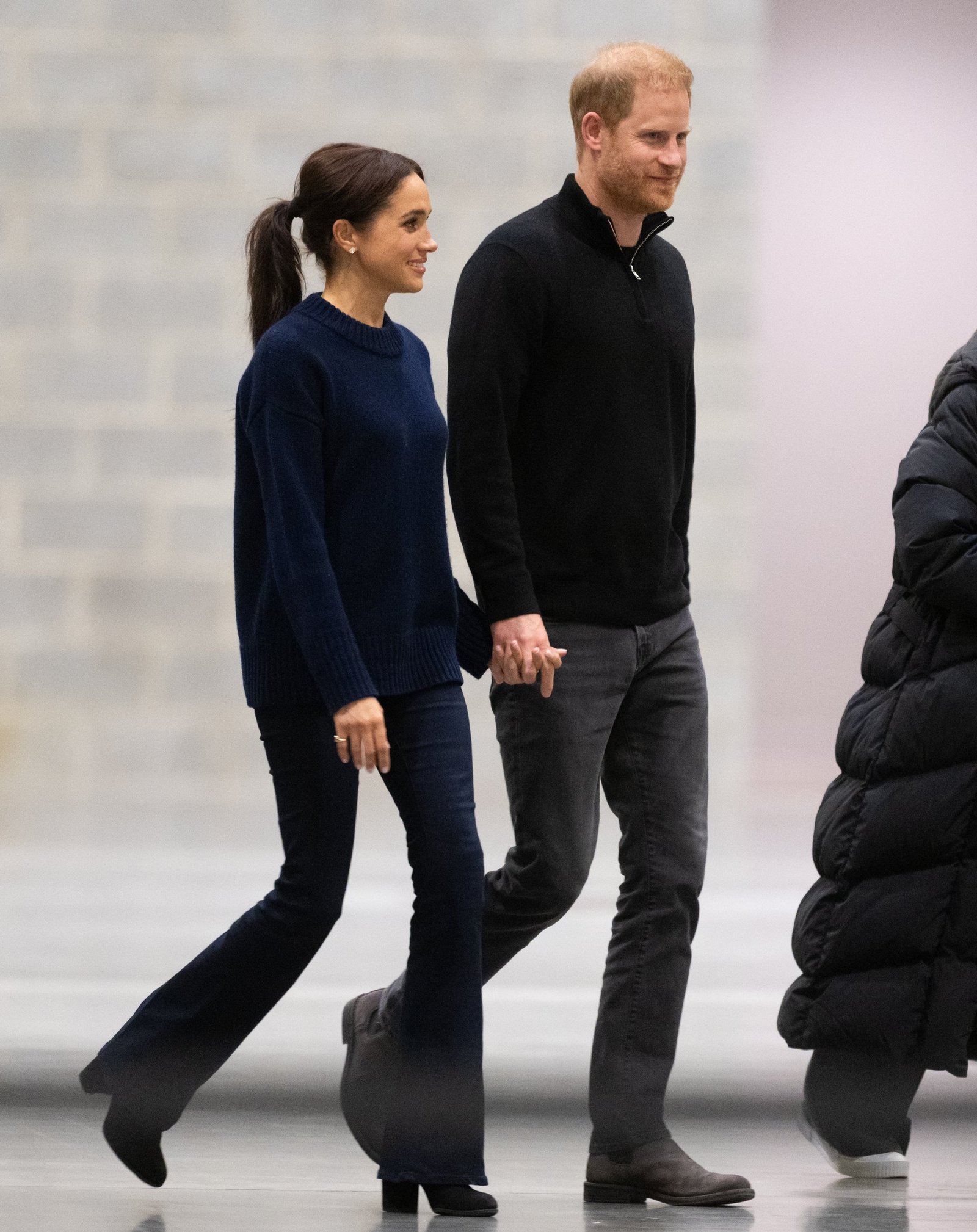
The Duke of Sussex has disclosed that he fell into a roughly two-week bout of depression shortly after relocating to Canada with Meghan, Duchess of Sussex and their infant son, Prince Archie, towards the end of 2019.In a new MasterClass released today, Prince Harry, 42, describes suffering what he calls an “adrenaline crash” within days of leaving behind the pressures of royal life.”Being in Canada, away from the stressful environment where presumably my body was just pumped full of adrenaline, within two or three days, I experienced this adrenaline crash, something that I’d never experienced before,” he says.The Duke explained that his body had grown so dependent on stress hormones that their sudden absence left him unable to cope. “I actually slipped into depression for about two weeks, and I felt like I couldn’t function without adrenaline,” he reveals. The move, he recalls, was intended “to get some space away from everything just to be able to think.”The Duke of Sussex has disclosed that he fell into a roughly two-week bout of depression shortly after relocating to Canada with Meghan, Duchess of Sussex and their infant son, Prince Archie, towards the end of 2019 | GETTYThe programme, titled Redefining Grief: Building Resilience Through Loss, paired Harry with neuroscientist Dr Mary-Frances O’Connor to examine how bereavement affects both mind and body. Much of the discussion centred on the duke’s experience of losing Princess Diana in a Paris car crash in 1997, when he was just 12.Harry acknowledged that for nearly two decades he masked his grief behind a single reflexive answer. “For 15, 20 years, when I was being asked, ‘Are you okay?’ My response was, ‘I’m fine.’ It was numbness, emotional shutdown,” he says.Without realising it, he explained, adrenaline had become the engine powering his daily existence. He credited that same unconscious force with propelling him into the armed forces at 20, describing military life as “the perfect distraction” that kept him from dwelling on anything beyond the immediate task.Returning from his second deployment to Afghanistan in 2013 proved a turning point. Harry said the things he witnessed and endured on tour appeared to unlock traumas that had long been buried within him.Prince Archie photographed as a baby in South Africa | PAPhysical symptoms soon followed. “I started to realise that I probably had become seriously depleted when just putting a simple dress shirt on, the tightening of the collar literally felt like I was suffocating, and I would be experiencing panic attacks just in the car on the way to work,” he recalls.That was the moment, he said, when he recognised something far deeper demanded his attention. Dr O’Connor drew an analogy between the nervous system and a car engine, likening cortisol to a fuel injection system that cannot sustain constant full throttle. Chronic stress, she explained, eventually depletes cortisol reserves, leaving a person foggy, exhausted and unable to perform, a description Harry says resonated strongly with his own experience.The MasterClass also delved into Harry’s prolonged struggle to accept that his mother was truly gone. He revealed that for years after her death, he harboured a fantasy that she had staged her own disappearance.”I believed that she had created this exit to get away from all the things that were destroying her life and that she was going to reenter the fray in some disguise and then whisk me and my brother away,” he said.Harry served in the British Army in Afghanistan | PADr O’Connor offered a neuroscientific explanation for why such beliefs persist. When we form deep bonds, she said, the brain encodes them as permanent, a conviction that the other person will always be present. The death of a loved one does not automatically override that wiring. “You’re not crazy,” she told Harry. “It’s an important part of your brain that holds attachment-bonded relationships together by believing they’re out there.”Harry also spoke candidly about the guilt that accompanied any prospect of personal happiness. For years, he said, he remained emotionally shut down because allowing himself to feel joy seemed like a betrayal of his mother’s memory.”I’d spent so long emotionally numb, to a large extent, because I felt disloyal and guilty for the possibility of being happy and joyful without her,” he shared. “I felt like I had to be sad and I had to be emotionally numb in order to prove to her that I missed her.”A pivotal shift eventually came when he recognised that Diana would have wished for his happiness above all else. “But the reality is, what I discovered was actually that she just wanted me to be happy. And that was a huge mental shift for me. It freed me, and it gave me a whole different outlook on life.”The programme was developed after MasterClass approached Harry last year with the idea of building a class around grief. Filming took place in California earlier this summer, though not at the Duke’s Montecito home.Its release on Thursday, two days before World Mental Health Day on October 10, is deliberate. Proceeds from the class will benefit two bereavement charities: Comfort Zone Camp and Scotty’s Little Soldiers, the latter a cause Harry has long supported.The Duke said his charitable endeavours now serve as a way of honouring Diana’s legacy. “Everything I do, everything I put my energy towards, I hope that my mother will be proud about it,” he said, adding that the causes he has gravitated towards closely mirror the work she once championed.”There is an element of carrying my mother in me that ultimately energises me for the work that I do.”