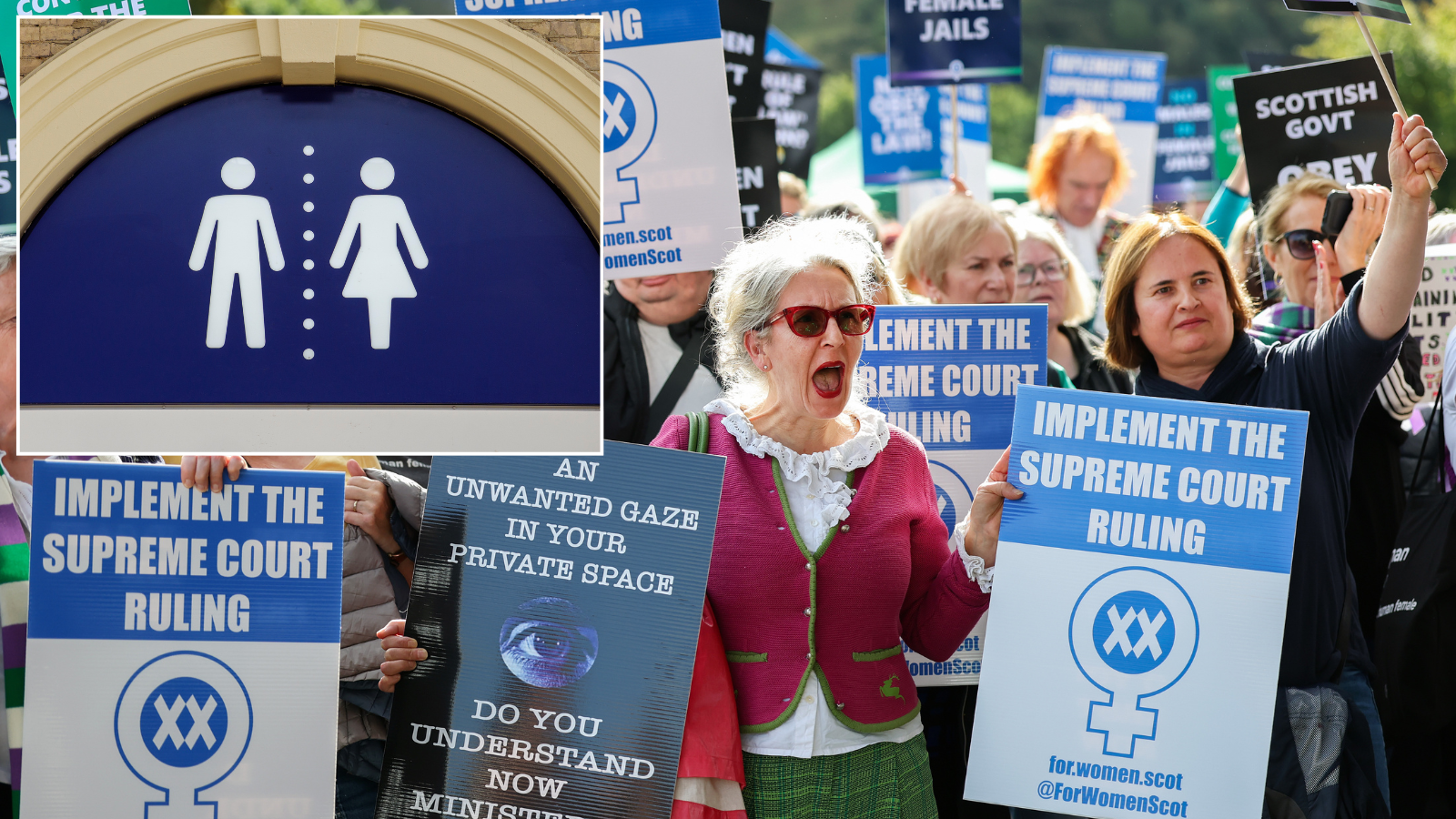
The Supreme Court’s single-sex space ruling will come into force at the beginning of August, Britain’s equality watchdog has said. Guidance on the use of changing facilities and toilets will become effective on August 5 under the new law. The code of practice comes into play more than a year after the Supreme Court ruled that “women” refers to biological sex for the purposes of the Equality Act 2010.For Women Scotland, the group behind the original Supreme Court, said they hope “everyone gets on with complying with the law”.A spokeswoman for the group told GB News: “It has been a long wait for the Code of Practice and, along the way, we’ve had to deal with a lot of lies and misdirection. “We hope that sense will now prevail as everyone gets on with complying with the law. “Businesses and public bodies should now stop giving an ear to any organisation who tried to argue that the Code was wrong and pay heed to those of us whose interpretation of the Equality Act was vindicated by the most senior judges in the land.”Nearly 13,000 toilets and more than 5,000 changing rooms could have to be amended to meet the new guidance, impacting hospitals, gyms and leisure centres across the UK.For Women Scotland were the activist group behind the Supreme Court ruling in April last year | GETTY At least 18,000 signs need to be changed, with the estimated cost into the millions.The code of practice, published in draft form in May, covers England, Scotland and Wales and states a service must be used based on biological sex in order for it to be classed as single-sex under the Equality Act. This means single-sex toilets, changing rooms, hospital wards, and refuges must be used based on a person’s sex at birth, not the gender in which they identify. Self-contained lockable cubicles have been suggested as provision for toilets and changing rooms for all.At least 18,000 signs need to be changed, with the estimated cost into the millions | GETTY The code noted it would be “very unlikely to be proportionate to put a trans person in a position where this is no service that they are allowed to use”. Public bodies such as local councils could face unadjusted costs of £20.6million for cleaning updated facilities.A further £14.2million annually for construction work, estimates suggest. Officials have warned these figures may increase further.The revised code marks the first update in more than 10 years. It was published eight months after being handed to the Government by the Equality and Human Rights Commission, with ministers facing criticism over the delay. In response, the Government maintained it was taking the necessary time to ensure the guidance was correct.The new rules will apply to service providers, including restaurants, leisure centres and hairdressers, as well as public functions such as council services and membership associations like local sports clubs with 25 or more members.However, the Trans+ Solidarity Alliance took a different view, branding the guidance “unworkable”. A spokesman for the group warned it risked causing “widespread harm for trans people and those who don’t conform to gender stereotypes, and put businesses and charities in the crossfire of endless litigation”.A Government spokesman previously said the statutory guidance is “about giving organisations the guidance they need, not changing the law or creating new rules”.The spokesman suggested “many businesses will already be largely compliant with the code so there will be no cost at all”.