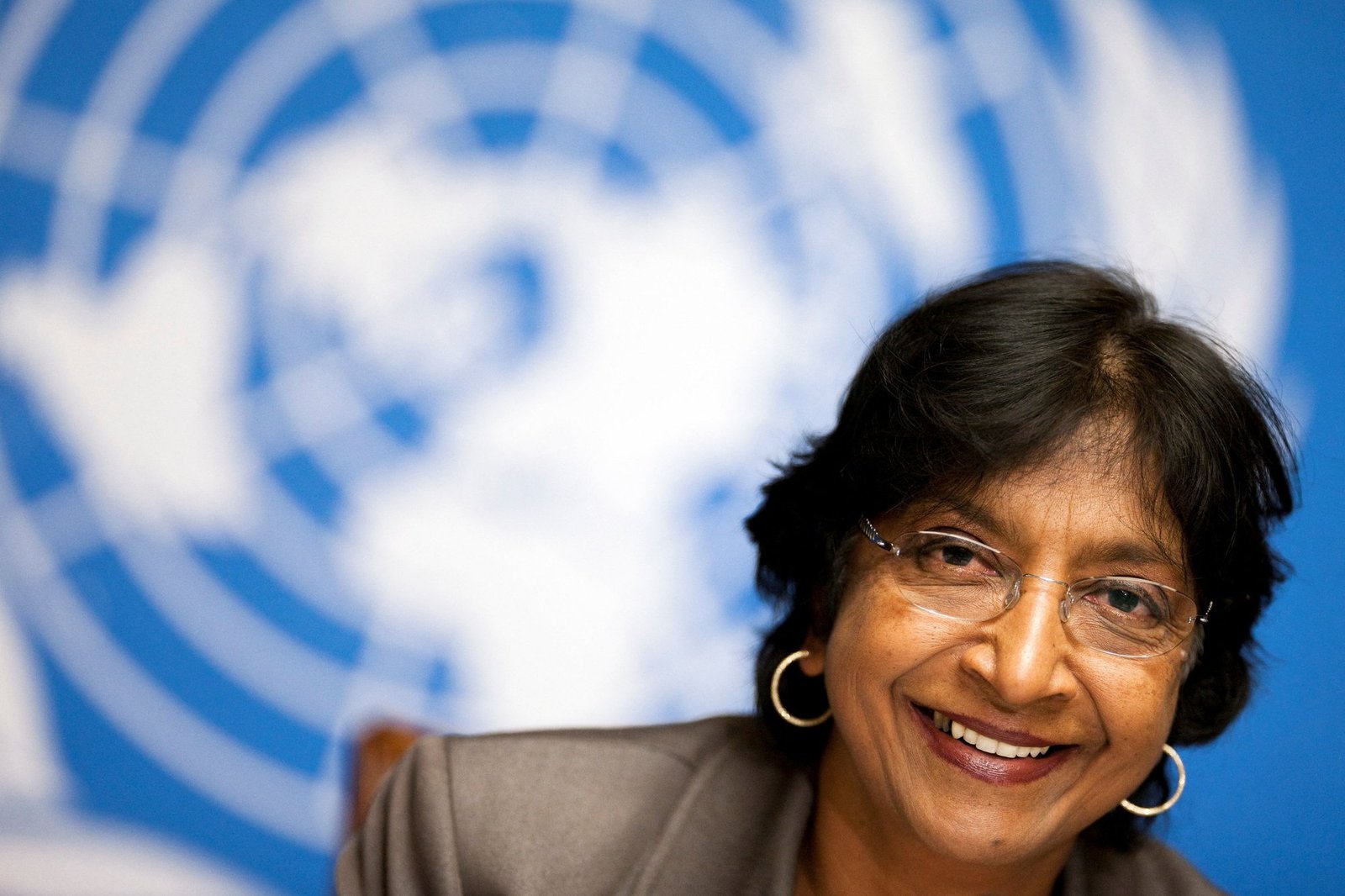
Former UN human rights chief and jurist Navanethem “Navi” Pillay has won the 2026 Nobel Peace Prize. The chair of the Norwegian Nobel Committee said Ms Pillay, who was born in South Africa, was recognised for her efforts to promote peace and international law.Ms Pillay says she is still “reeling with surprise” and dedicated her prize to “survivors of international crime”.The committee described the prize as going “to a person who, with extraordinary courage and integrity, has paved the way for a more comprehensive global legal order.”It hailed her as “one of the great defenders of international legal principles in our time,” adding that her “commitment to justice and human dignity is a source of hope and inspiration to all who seek to bring about a more peaceful world.”In September 2025, Ms Pillay led the UN Independent International Commission of Inquiry, which concluded that Israel committed genocide against Palestinians in Gaza.She said the evidence showed “an intent to destroy the Palestinians in Gaza” and placed responsibility with Israeli authorities at the highest levels.Ms Pillay told the inquiry: “When clear signs and evidence of genocide emerge, the absence of action to stop it amounts to complicity.”Navanethem “Navi” Pillay has won this year’s Nobel Peace Prize | REUTERSShe currently sits as an ad hoc judge at the International Court of Justice, adjudicating the case brought by The Gambia against Myanmar over allegations of genocide.The Norwegian Nobel Committee stated that her “independence, expertise, and steadfastness” have established her as one of the most highly regarded international law specialists of the present era. It also noted that she had played a central part in ensuring the prosecution of war crimes, crimes against humanity and genocide on the world stage.Her “distinguished career reminds us of the need to support, fortify and expand the global rule of law,” the committee said.Ms Pillay said she is still ‘reeling with surprise’ | REUTERSNelson Mandela appointed Ms Pillay to the High Court of South Africa in 1995, making her the first black woman to serve as a judge on that bench.She went on to spend eight years at the International Criminal Tribunal for Rwanda, presiding over the court as its president from 1999 to 2003.In the 1998 Jean-Paul Akayesu case, Ms Pillay co-authored the judgment that stated for the first time mass rape and sexual violence were crimes against humanity and acts of genocide. A further milestone came with the 2003 Media Case, which established that radio broadcasts and newspaper articles had been used to incite the 1994 genocide.Between 2003 and 2008, Ms Pillay served as a judge in the Appeals Chamber of the International Criminal Court. She was then appointed UN High Commissioner for Human Rights, a position she held from 2008 to 2014.During her time as commissioner, she championed the rights of detainees, women, children and torture victims, while also pressing powerful states on war crimes and civil liberties abuses. She became a pioneer in advocating for LGBTQ+ rights and worked to combat systemic racism globally.Her mandate also took her to Sri Lanka in 2013, where she raised concerns about accountability for alleged wartime abuses and the intimidation of journalists and activists.