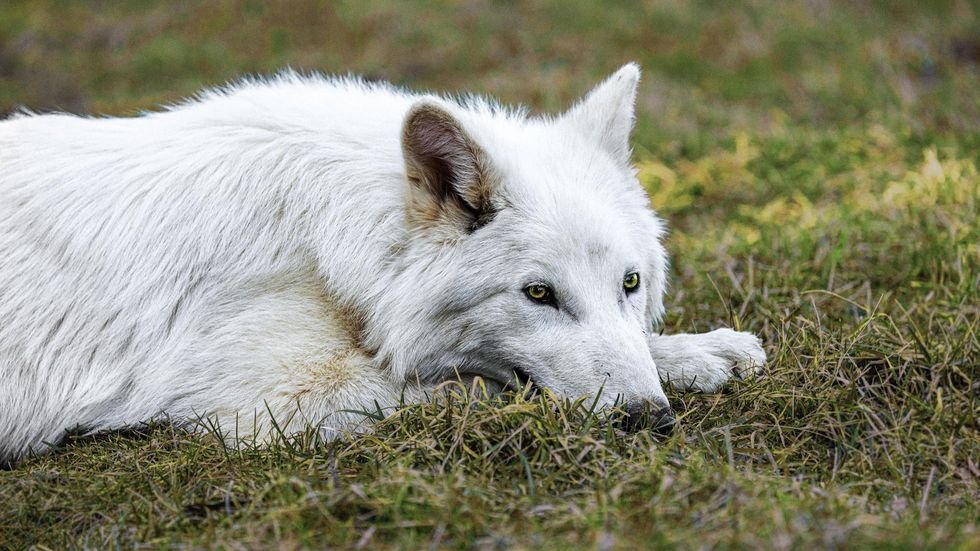
A long-dead predator is now thriving after being brought back from extinction, a Texas-based biotechnology firm has said.Three dire wolf pups brought “back from the dead” have now reached an age where they can reproduce.Romulus, Remus and Khaleesi – named after Rome’s legendary founders and the dragon queen from George RR Martin’s A Song of Ice and Fire – were brought into existence last year by Colossal Biosciences using ancient genetic material to modify the DNA of living wolves.
The species vanished roughly 12,000 years ago as the last ice age drew to a close.Mr Martin’s inclusion of dire wolves in his bestselling books – which inspired the television series Game of Thrones – brought widespread public awareness to the prehistoric predators.
Colossal Biosciences intends to produce more pups before the year ends to broaden the genetic diversity of its pack.The ultimate objective is establishing a self-sustaining population that breeds without human intervention.Matt James, the company’s chief animal officer, said: “The plan is to create an inter-breedable population of dire wolves in which they would eventually breed naturally to create a sustainable population of the world’s first de-extincted species.”We will grow the population through assisted reproduction initially and then eventually only rely on natural breeding.”
The dire wolf pups were brought into existence last year by Colossal Biosciences | COLOSSAL BIOSCIENCES
Mr James added: “The dire wolf pack is actually breeding-aged at this point, but we will initially grow the pack through assisted reproduction while we create new, genetically diverse individuals to grow our pack.”The scientific process involved examining grey wolves, the nearest living relatives of dire wolves, and identifying genetic differences between the two species.Researchers obtained dire wolf DNA from a skull discovered in Idaho dating back 72,000 years and a tooth found in Ohio that was 13,000 years old.Scientists then performed 20 modifications to grey wolf DNA, introducing characteristics including a pale coat, enlarged teeth, increased musculature and a unique vocalisation.
ANIMALS – READ THE LATEST:
Colossal Biosciences intends to produce more pups before the year ends to broaden the genetic diversity of its pack | COLOSSAL BIOSCIENCES
These genetically altered cells were placed into dog egg cells and transferred to surrogate canines.The pups were delivered via caesarean section to reduce potential complications during birth.Ben Lamm, the chief executive and co-founder of Colossal Biosciences said: “The dire wolves are doing great. The three dire wolves live on a 2,000-acre secure, expansive ecological preserve that allows us to monitor and manage them while providing them a semi-wild habitat to thrive in.””We hope to have more dire wolf pups by the end of the year,” he added.
The scientific process involved examining grey wolves, the nearest living relatives of dire wolves | GETTY
The animals live at a secret location in the US, where their diet consists of beef, venison, horse meat and specially developed dry food.During the Pleistocene Epoch, which spanned from 2.58 million to roughly 11,700 years ago, dire wolves lived across North and South America.The biotech company has ambitions extending beyond dire wolves.It aims to bring back the dodo and reintroduce it to Mauritius, where the flightless bird was hunted to extinction during the 17th century.
The animals reside at a secret location in the US, where their diet consists of beef, venison and horse meat | COLOSSAL BIOSECIENCES
Woolly mammoths are also on the agenda, with the firm having already created “woolly mice” by inserting mammoth genetic traits into small rodents.The thylacine, commonly known as the Tasmanian tiger, which disappeared in 1936, features on the company’s de-extinction list.So too does the moa, a bird standing 12 feet tall that once roamed New Zealand’s forests before dying out between the 13th and 15th centuries.The firm also revealed last month its intention to resurrect the Bluebuck, a distinctive blue antelope from southern Africa that was wiped out within four decades of scientists first documenting it.