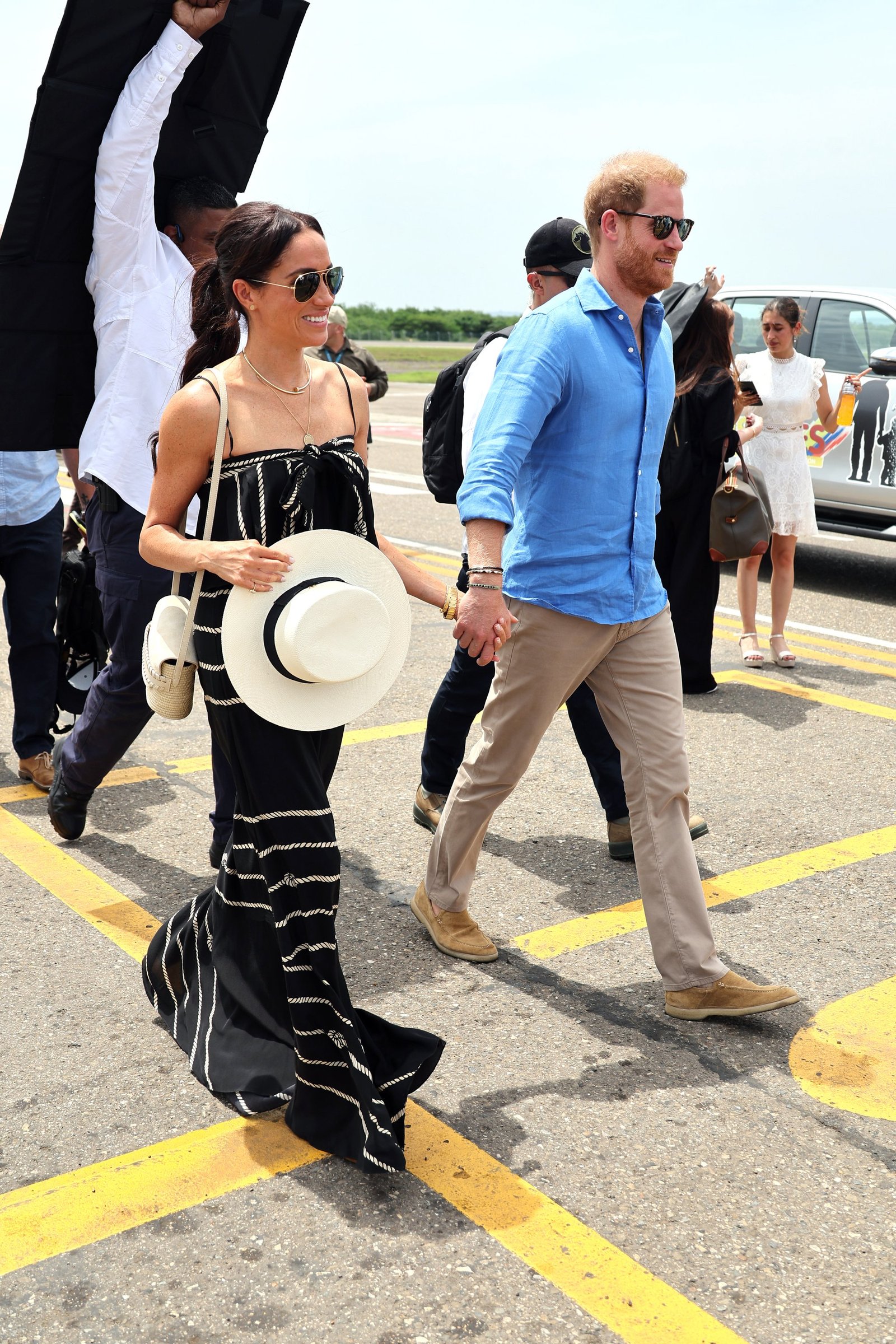
Prince Harry’s UK return “will change the nature” of his security decision, sources have claimed, as armed protection for the Sussexes could now be considered.A risk assessment ordered by the Royal and VIP Executive Committee (Ravec) was completed at the end of July, yet its findings have not been disclosed to the Duke of Sussex.Harry was formally notified that the evaluation had concluded and has since been pressing for the outcome, but remains in the dark about whether he, Meghan and their two children will receive police protection upon their return.The Sussexes have not publicly addressed the status of their protection arrangements ahead of the move.Prince Harry’s UK return ‘will change the nature’ of his security decision, sources have claimed, as armed protection for the Sussexes could now be considered | GETTYRavec is now understood to be preparing to restart its review of the duke’s claim for state-funded security, with the family’s permanent relocation fundamentally altering the equation. Previously, the committee had been weighing whether the Sussexes should automatically receive armed protection each time they visited Britain.A senior Government source told the Times that the “decision to live in the UK will change the nature of the consideration on security.” Another source indicated the move could speed up the risk management board’s deliberations by shifting the circumstances entirely.Should Ravec determine that armed protection is warranted, officials would then need to settle on the appropriate level – an assessment described as more straightforward since it would mirror the process for other high-profile individuals requiring security.No decision on the Sussexes’ arrangements is anticipated before their arrival next week, though temporary measures could be implemented while Ravec completes its full review. The risk assessment was conducted by Ravec’s risk management board before the duke had informed officials of his intention to return permanently with his family.The news that Prince Harry and Meghan Markle plan to leave their Montecito home and return to Britain this month has made global headlines | GETTYGovernment officials stressed that taxpayer-funded protection for the Sussexes should not be considered inevitable. They noted that Harry’s security was stripped while he was still residing in Britain, immediately after he and Meghan stepped back from royal duties in January 2020.The couple, who relied on a private security team during their years in the United States, will settle at an undisclosed non-royal property outside London. Prime Minister Andy Burnham described the matter on Thursday as a “private matter.”Harry’s most recent comprehensive risk evaluation took place in April 2019, when he was classified at the highest possible threat level – seven out of seven. At that time, only Queen Elizabeth II and then-Prime Minister Theresa May were judged to face comparable danger.The duke secured the right to a fresh full assessment late last year, representing a significant Home Office reversal. He was informed it would occur in March, but was later told that all risk management board reviews had been suspended.The delays were partly driven by unprecedented demands on protection resources. The resignation of Sir Keir Starmer created a record number of living former Prime Ministers, each entitled to lifelong round-the-clock security. Safeguarding the eight former premiers before Sir Keir required roughly 135 officers at a cost of approximately £13million. Harry’s legal challenge against the Home Office concluded in defeat at the Court of Appeal in May 2025.Richard Aitch, a former Royal Military Police close protection specialist, insisted the duke requires Government-level security but argued the public purse should not cover the full expense. “There has to be a workaround solution. There has to be a collaboration,” Mr Aitch told Times Radio, adding that if the Sussexes pursue “solely commercial avenues” without serving the nation, taxpayers should not bear the entire cost.”However, he is a member of the Royal Family. He is still going to attend specific royal functions and venues every so often.”Prince Harry photographed leaving the Royal Courts of Justice | GETTYA former cabinet minister estimated that protecting the family of four around the clock would cost between £3million and £5million annually. They predicted Ravec would ultimately approve armed protection and suggested the King would be “quite extensively consulted.” The former minister warned that Ravec would face pressure to consider potential liabilities should anything go wrong.Harry has consistently maintained that protection ought to be evaluated purely based on risk and specific threats rather than treated as a privilege or perk associated with royal duties. Critics have drawn comparisons with his non-working royal cousins – Peter Phillips, Zara Tindall, and Princesses Beatrice and Eugenie – none of whom receive police protection.The duke counters that the consequences of a potential attack on the King’s son and “a symbol of the crown” set his case apart.Ravec draws its membership from the Royal Household, the Metropolitan Police, the Home Office, the Cabinet Office and the Foreign Office. Sir Clive Alderton, the King’s private secretary, sits on the committee but has increasingly sent his deputy, Theo Rycroft, in his place. Mr Rycroft is believed to have encouraged a gentler stance towards reconciliation with the Sussexes.A Home Office spokesman told GB News: “The UK government’s protective security system is rigorous and proportionate. It is our long-standing policy not to provide detailed information on those arrangements, as doing so could compromise their integrity and affect individuals’ security.”