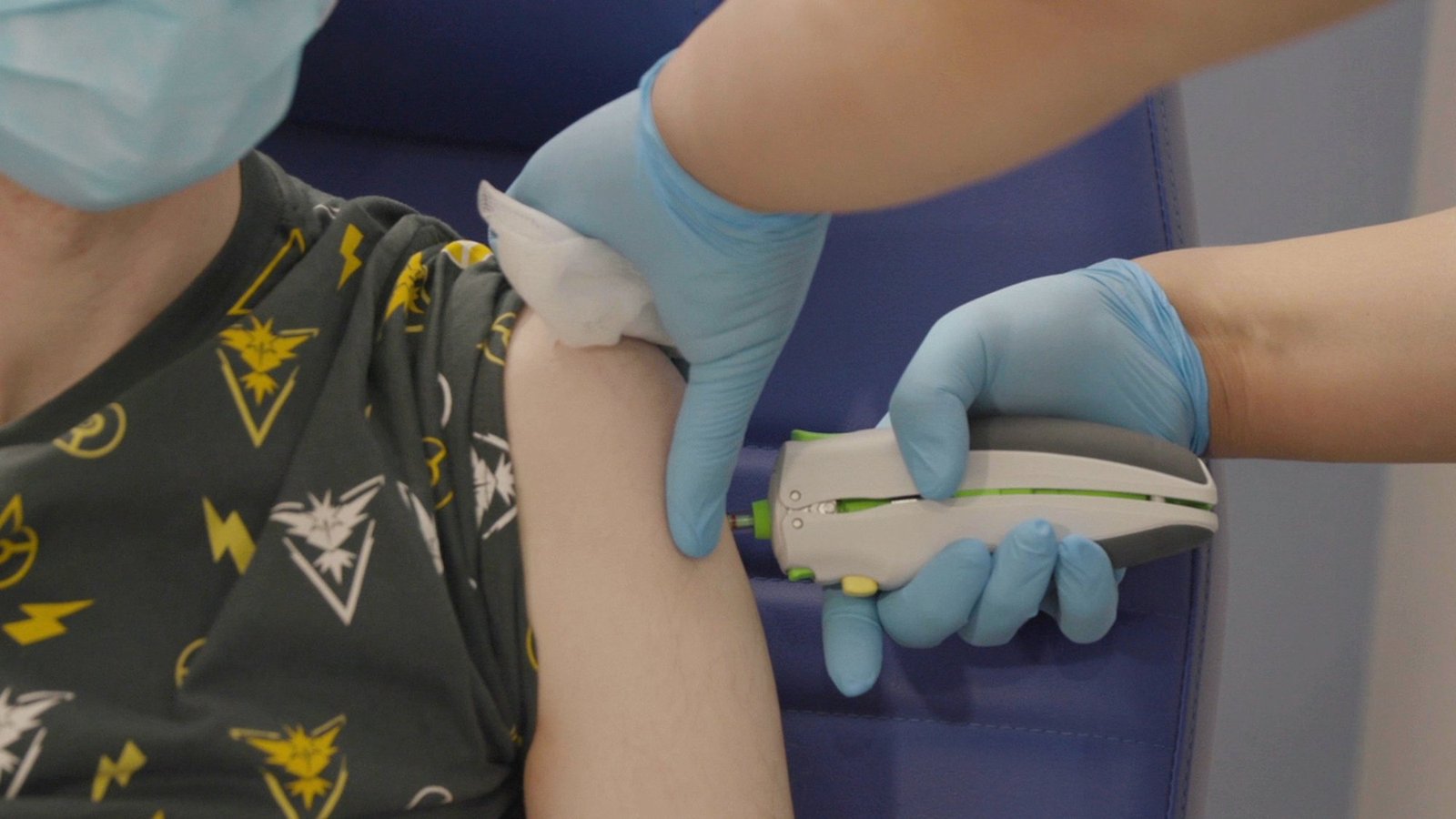
It involved 262 children aged six to 17. Of these, 211 were allocated AstraZeneca and 51 a meningitis B vaccine used as a control.In total, 210 children received at least one AstraZeneca injection and 193 received two.The trial had been temporarily paused on April 6, 2021, while regulators investigated reports of dangerous blood clots.Denmark, Norway and Iceland first suspended AstraZeneca on March 11 following reports of unusual blood clots, including fatal cases.Ireland, the Netherlands, Germany, France, Italy, Spain and Sweden subsequently suspended the vaccine, although some countries later resumed its use. Denmark removed it from its national vaccination programme altogether.Britain’s Joint Committee on Vaccination and Immunisation (JCVI) recommended on April 7, 2021, healthy adults under 30 receive an alternative vaccine for their first dose.This advice was extended to healthy adults under 40 on May 7. AstraZeneca’s second doses remained recommended for most adults who had already received a first injection.Nevertheless, the Oxford trial involved healthy children who were not eligible for AstraZeneca through Britain’s routine vaccination programme.Research published in the medical journal The Lancet confirms younger children received their second doses 112 days after their first — a timetable placing the delayed vaccinations approximately two months after the May meeting.This was nearly four months after the first European suspensions and approximately three months after Britain’s initial recommendation to offer younger adults alternative first-dose vaccines.Children aged six to 11 were recruited between March 13 and April 2. The published research does not provide individual injection dates, meaning the precise calendar dates cannot be established from the paper.Retired consultant paediatrician Dr Ros Jones, who has raised concerns about Covid vaccination in children, is to highlight her concerns about the Oxford trial at a conference examining mistakes made during the pandemic in London on December 11.She told GB News: “It beggars’ belief this trial even got ethical approval in the first place – rules for trials in children are extremely strict and can only be done for their own potential benefit, not simply for scientific interest or wider societal benefit. Did they really explain the potential risks to parents? If they had done so, would any parent have agreed?”Professor Carl Heneghan, Director of Oxford University’s Centre for Evidence-Based Medicine, said: “It was known there was no direct benefit of the Covid vaccination for children as they had an extremely low risk of death or illness from the virus. The fact this trial was authorised to go ahead was unjustified and a failure of ethics.”The researchers reported AstraZeneca produced an immune response in children and no vaccine-related serious adverse events had been identified by the October 2021 data cutoff.Temporary side effects were common. Around 80 per cent of children receiving AstraZeneca reported at least one local or systemic reaction after their first dose, with fatigue and headaches among the most common.Almost half (47 per cent) of children aged six to 11 and 16 per cent of those aged 12 to 17 developed a fever after their first injection.Final results published in the journal Vaccine in August 2025 recorded five serious adverse events and four adverse events of special interest during follow-up. Investigators assessed none as related to the study vaccinations and there were no deaths.AstraZeneca’s vaccine was never introduced into Britain’s routine childhood Covid vaccination programme.Vaccinating children became one of the most controversial decisions of the pandemic after Britain’s four Chief Medical Officers, led by Professor Sir Chris Whitty, recommended Covid jabs for healthy 12 to 15-year-olds despite the JCVI concluding the health benefits alone were too small to justify a universal programme.The Chief Medical Officers argued wider benefits, including reducing disruption to children’s education, tipped the balance in favour of vaccination.Developed with Oxford University, AstraZeneca’s vaccine had initially been hailed as a major scientific breakthrough and played an important role in protecting older and vulnerable adults during the pandemic.Regulators still maintain its benefits outweighed its risks for many adults, particularly those facing a greater risk of severe Covid.An Oxford University spokesman said: “Oxford University believes continuing the COV006 trial was justified by the scientific evidence available at the time. Following concerns about a rare clotting condition, the trial was paused and only resumed after independent regulatory and ethical approval. Participants were given updated safety information and asked to consent again before receiving further vaccinations.”AstraZeneca said in a statement: “Patient safety is our highest priority. From the body of evidence in clinical trials and real-world data, the Oxford-AstraZeneca vaccine has continuously been shown to have an acceptable safety profile and regulators around the world consistently state that the benefits of vaccination outweigh the risks of extremely rare potential side effects. We are incredibly proud of the role the Oxford-AstraZeneca played in ending the global pandemic.”