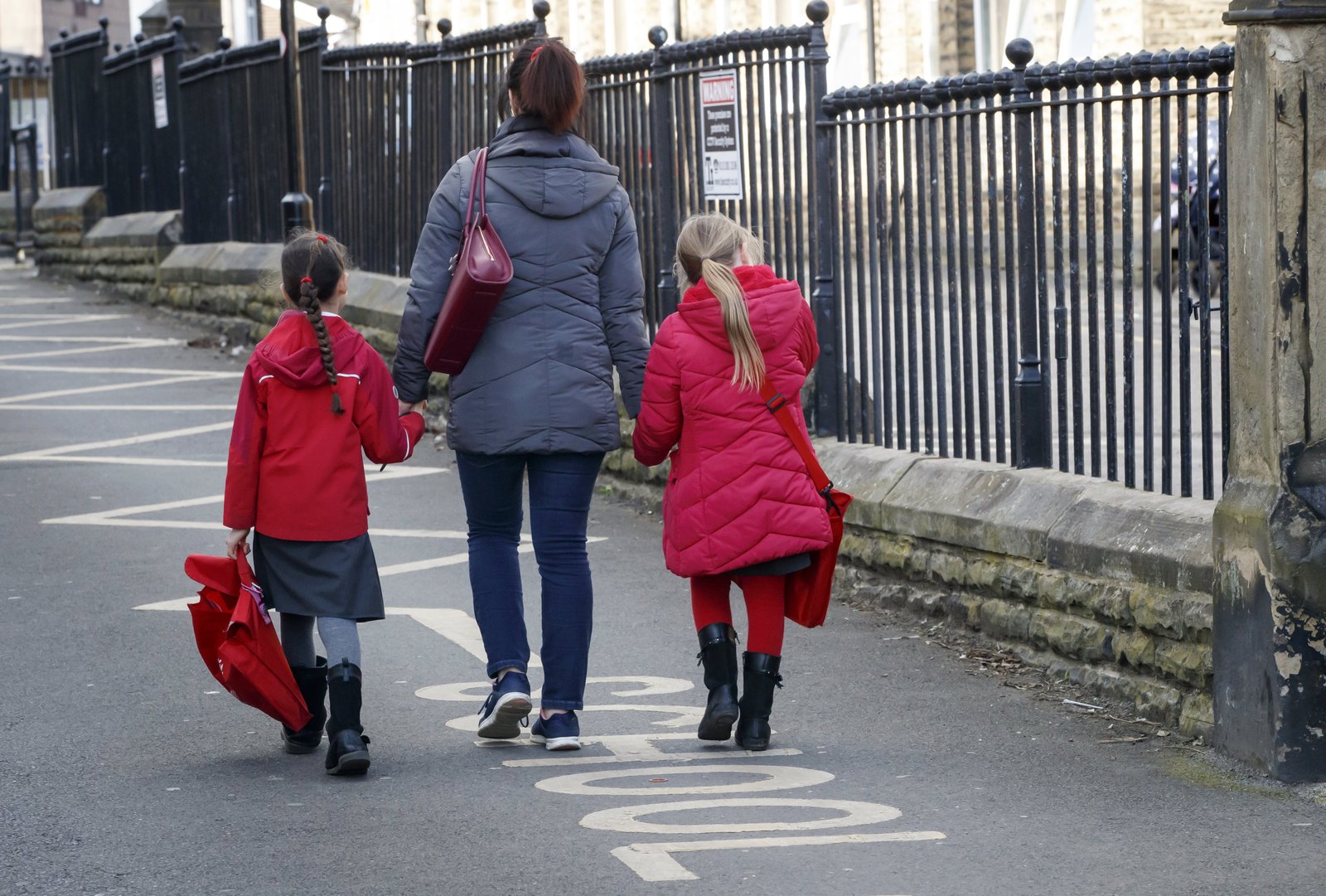
The number of children receiving disability benefits has tripled to almost one million with a surge in claims for learning difficulties, behavioural disorders and ADHD-related conditions driving up the bill, new research reveals.An explosive new report by the Policy Exchange think-tank reveals the equivalent of one additional child in every classroom in England and Wales has been added to the disability benefit system for these conditions since the pandemic. This means each classroom of under-16s now has on average 2.5 children receiving benefits. Researchers warn since the pandemic, annual spending on Child Disability Living Allowance (DLA) has more than doubled to £5.3billion and is forecast to reach £8.3 billion by 2030/31.Policy Exchange is demanding tougher eligibility rules, arguing the system needs to concentrate support on children with the greatest needs.The controversial proposals are likely to intensify the debate over Britain’s soaring disability benefits bill, with families and campaigners warning children with serious disabilities already struggle to obtain adequate support. The report reveals that the number of children receiving DLA in England and Wales rose from 314,000 in 2010 to 915,000 this year, which is an increase of 191 per cent. Of these, an additional 404,000 claimants have been recorded since the pandemic across three categories: learning difficulties, behavioural disorders and hyperkinetic syndrome or ADHD-related conditions. Together, these conditions now account for 86 per cent of child DLA claimants, compared with 73 per cent before the pandemic and just 48 per cent in 2002.The researchers forecast their share could reach 90 per cent within five years. Claims for all other disabling conditions combined have fallen by six per cent over the past five years.The researchers also argue some questions on the 40-page disability application form could apply to children without disabilities, raising concerns about how accurately it identifies those needing financial support. The report also found claims have increased faster than recorded diagnoses.Between 2019/20 and 2024/25, the prevalence of learning difficulties among children aged up to 17 increased by 35 per cent, while DLA claims recorded under learning difficulties rose by 55 per cent. Diagnosed ADHD increased by 82 per cent, compared with a 177 per cent increase in DLA claims for behavioural disorders and ADHD related conditions combined, although the diagnostic and benefit categories are not directly equivalent.The number of children receiving disability benefits has tripled to almost one million | PAThe report also highlights a striking shift towards higher payments. Among claimants in the three fastest-growing categories, the proportion receiving the highest care allowance rose from 30.5 per cent before the pandemic to 42.4 per cent in 2025/26.Nearly 98 per cent now receive either the middle or highest care rate, while 85 per cent receive a mobility component compared with 52 per cent of children claiming for other disabling conditions. Mobility payments can cover children needing supervision outdoors, not only those with physical difficulties. The report found families qualifying for the highest levels of care and mobility support can now receive up to £194.60 a week, which is more than £10,000 a year, compared with £148.85 a week, or £7,740 annually, before the pandemic. Although payment rates have risen broadly with inflation, researchers found a growing proportion of children with learning and behavioural conditions are qualifying for higher awards. Jean-André Prager, Policy Exchange’s Senior Fellow in Welfare and a former adviser to three Prime Ministers, said: “Child DLA is now supporting a very different population from the one it was designed for. Of course, disabled children deserve support. But we need to make sure that support is reaching those with the greatest needs and ask whether some of this money could be used more effectively to provide earlier support for children and families.”Co-author Keir Haldane said: “The growth in Child DLA has been striking, both in the number of claimants and in the level of awards. Reform should focus on whether the current system is still the most effective way to support children with additional needs.”Policy Exchange proposes restricting eligibility for the three fastest-growing categories and tightening the criteria governing payment levels. The think-tank has proposed sharply restricting eligibility for new assessments and reassessments in the three fastest-growing categories, with estimated savings of £11.9 billion over four years.It says some of the savings could be reinvested into prevention and help for children and families, including £1billion in children’s mental health services, £300 million in family hubs and £200 million in parental support programmes. The proposals come amid wider controversy over disability benefit reform and the financial pressures facing families.Separate Department for Work and Pensions estimates show that £190million in DLA was underpaid in 2025/26, compared with £70 million in overpayments covering both adults and children. A separate Department of Work and Pensions analysis estimated £710 million in unfulfilled DLA entitlement, highlighting cases where claimants had additional needs that were not reflected in their awards.