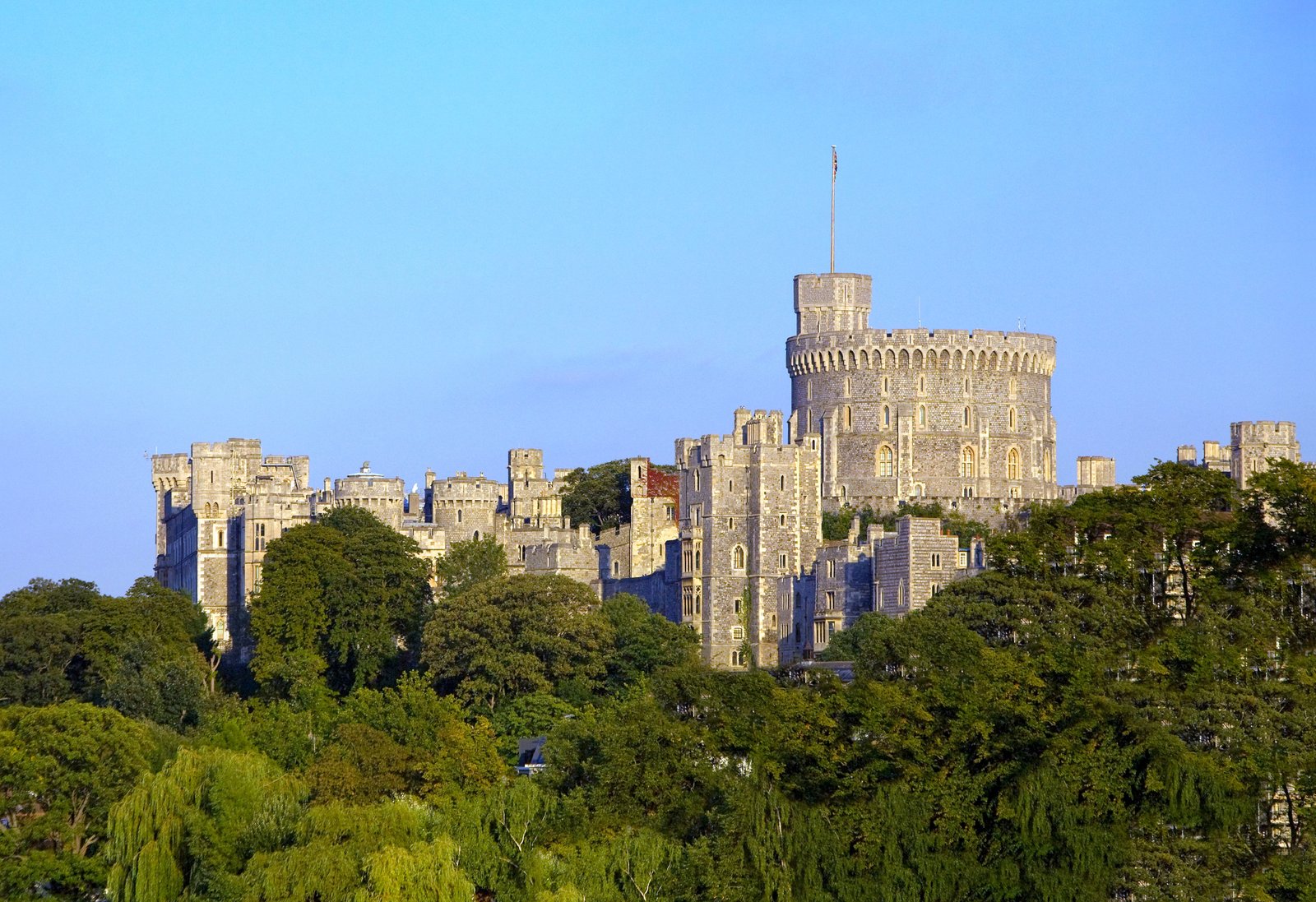
Buckingham Palace refused a request from the Government to have a post-Brexit deal signed in Windsor Castle, a book has revealed.The deal, which included the framework to avoid a hard border between Ireland and Northern Ireland, was agreed in February 2023.Details of the exchange emerged in an updated paperback edition of Power and the Palace by Valentine Low, which is due for release on Thursday.Officials did not want to sign the deal in Brussels, fearing it would appear as though they were deferring to European authority.Additionally, the European Commission did not want to sign the deal at Downing Street.So, after the Palace agreed to name the agreement the Windsor Framework, in an attempt to make the deal sound “less transactional and more of a settlement”, officials then requested to sign the treaty inside Windsor Castle.This was a step deemed too far by the Royal Household.They were concerned they “could be walking into a minefield” and that their involvement “might be seen as too political”.Buckingham Palace refused a request from the Government to have a post-Brexit deal signed in Windsor Castle, a book has revealed | GETTYCourtiers were determined to protect the monarch, who assumed the throne merely five months prior, from any perception that he was straying into politically contentious territory.Instead of Windsor Castle, the Fairmont Hotel, situated approximately four miles away in Windsor Great Park, was offered as an acceptable alternative to sign the deal.Mr Low wrote in his book: “The palace wanted to do what they could to support stability in Northern Ireland, and it was an area in which they were prepared to take some risk. But they knew they could be walking into a minefield and wanted reassurance that the government would have their back.”He added: “The palace did have its concerns, wondering whether its involvement might be seen as too political. Officials were particularly sensitive to this, because it was early in the King’s reign and they were determined that he should avoid doing anything which could be seen as straying beyond the constitutional constraints of his new role.”Given his history, they knew that critics would be swift to pounce on anything that looked like he was overstepping the mark. So when the government suggested that perhaps the framework could be signed at Windsor Castle itself, the palace swiftly told them that that was going too far.”Near the castle was OK, at the castle wasn’t. Instead, they agreed that the signing should be at the Fairmont Hotel in Windsor Great Park, some four miles from the castle.”The then-Prime Minister Rishi Sunak and European Commission President Ursula von der Leyen held a joint press conference at the Fairmont Windsor Park hotel following their agreement.The then Prime Minister Rishi Sunak and European Commission President Ursula von der Leyen held a joint press conference at the Fairmont Windsor Park hotel following their agreement | GETTYRoyal officials imposed a further condition: any audience between the King and von der Leyen, who was reportedly eager to meet him, must remain entirely separate from the signing proceedings. The monarch subsequently received the EU chief for tea and photographs at Windsor Castle.Jacob Rees-Mogg, the former Conservative cabinet minister, condemned the royal meeting as “constitutionally unwise to involve the King in a matter of immediate political controversy”.The framework was formally signed the following month in London by Foreign Secretary James Cleverly and Commission Vice-President Maros Sefcovic.