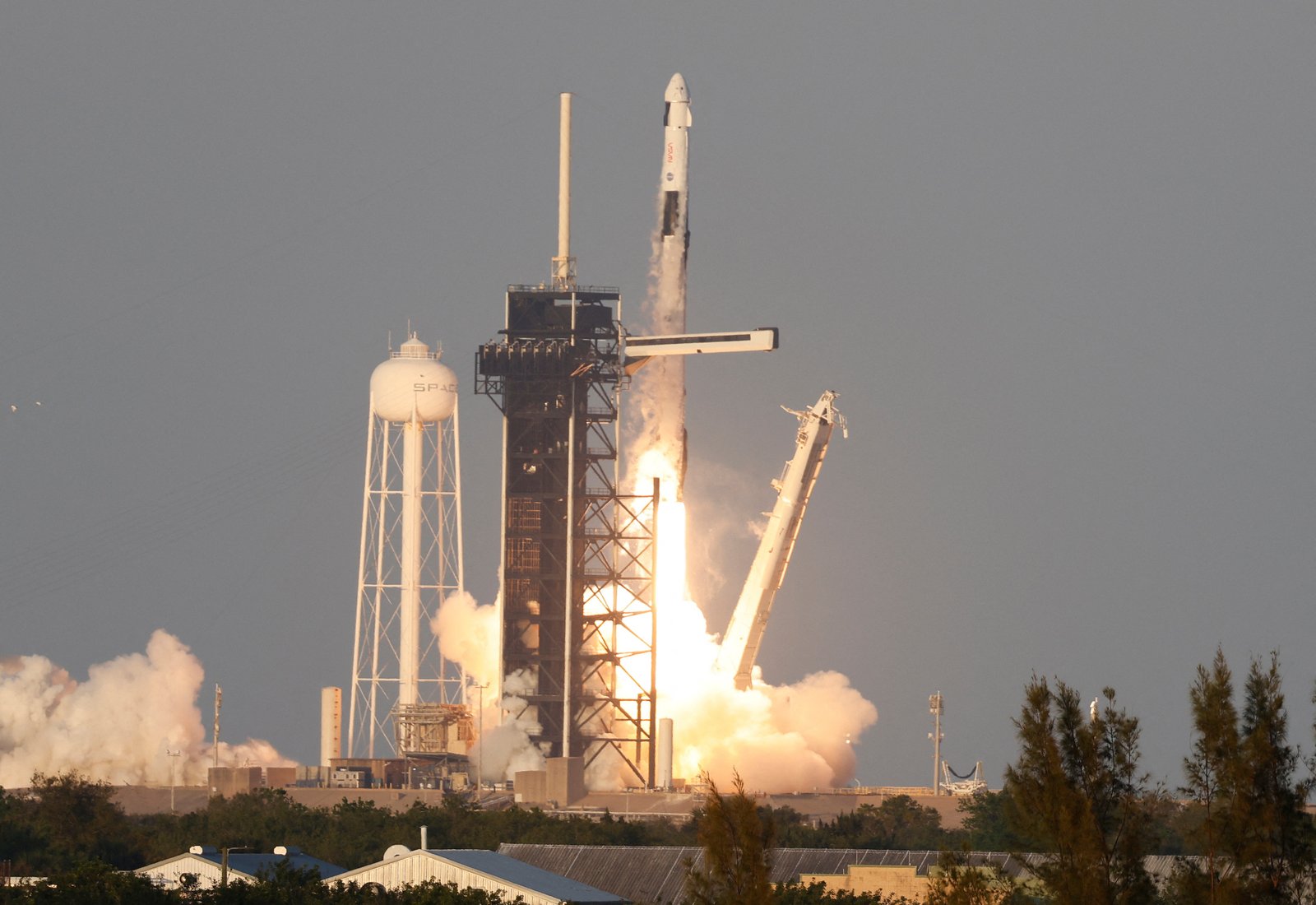
Elon Musk will place a SpaceX rocket on a 5,400mph collision with the moon in just hours, as Nasa confirms it is closely monitoring the situation.The upper section of one of SpaceX’s Falcon 9 rockets will “impact” the moon on August 5, according to Nasa’s Centre for Near-Earth Object Studies. Nasa reached the verdict after it used independent astronomers as well as public data that confirms a portion of the rocket launched in January 2025 was on an accidental crash course with the Moon.”There is no danger to Earth,” said spokesman Jimi Russell. “Nasa will continue to track the booster for training purposes, as well as later observe the impact site for scientific purposes.”The rocket was launched as part of a collaboration between the US and Japan to carry a pair of lunar landers and scientific equipment to the moon.Some parts of Falcon 9 were designed to return to Earth, while other parts were shed in space and remain there unless they make contact with objects in space.The piece set to make contact with the Moon is the height of a five-storey building, which weighs at least 4,000kg on Earth. The debris is believed to be from a SpaceX Falcon 9 rocket | REUTERSAstronomer Bill Gray, who identified the collision course, said that the debris will hit the Einstein crater of the Moon, which is visible from Earth and receives daylight.The impact is due to occur at 6.35am on Wednesday.Dr Matt Bothwell, public astronomer at the University of Cambridge, said: “It’s something really huge smashing into the Moon. It’s not remotely dangerous; we can just watch the show.“It’s going to impact and it’s going to send up a huge plume of dust, maybe 50km into the air or more, and that’s going to spread sideways over time.The European Space Agency has estimated there are around 54,000 floating objects in space over 10cm | NASADue to the Moon’s lack of atmosphere, the impact will be “more impressive than any [similar] explosion on Earth”, Dr Bothwell said.The astronomer also warned that the collision is a cautionary tale for the ever-growing issue of human space waste.He continued: “I think more people should be more worried about space debris.“Every single year we put more stuff in orbit. Sometimes the satellites just collide, and they shatter into more pieces. “I think there’s a worry about a runaway cascade, if we put so much stuff in orbit.”The European Space Agency has estimated there are around 54,000 floating objects in space over 10cm.Humans have caused 17,000 tonnes of debris since the Space Age began in 1957.The last time a dead rocket impacted the Moon was in 2022, when the Chinese Long March 3C upper stage from the 2014 Chang’e 5‑T1 mission hit the far side of the Moon.Nasa initially launched objects directly at the Moon in an attempt to gain data ahead of the Apollo missions.