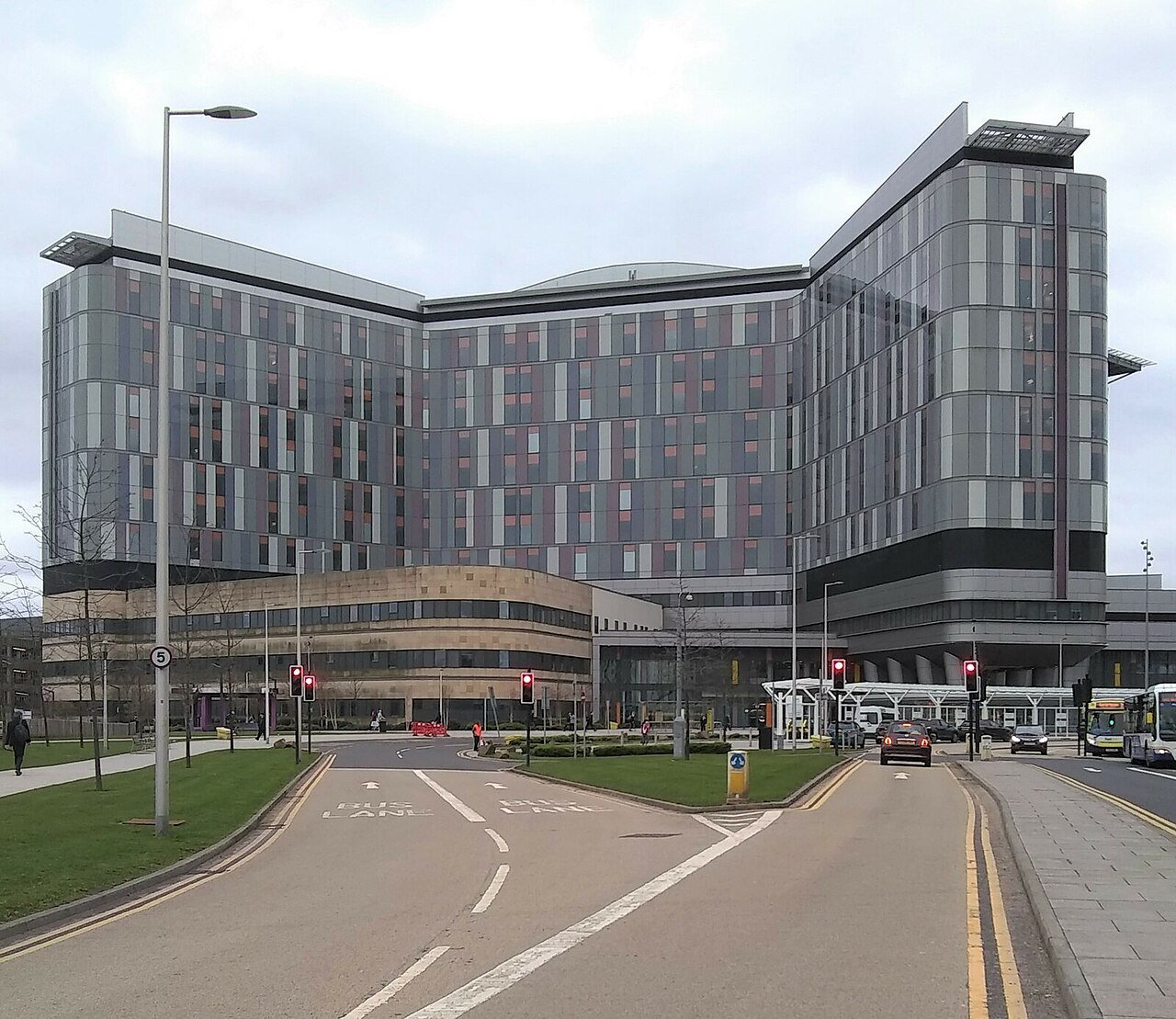
A suspected Ebola patient at a Glasgow hospital does not in fact have the deadly virus, officials have confirmed.A ward at the Queen Elizabeth University Hospital was been forced into a lockdown on Tuesday due to a suspected case of the virus.An individual is said to have arrived at the hospital’s Acute Receiving Unit during the early hours of the morning.Precautionary measures were then put in place amid fears Britain may have just suffered its first case since a massive outbreak in the Democratic Republic of Congo and Uganda in May.Public Health Scotland (PHS) said it was aware that an individual in Scotland was tested for Ebola as a “precautionary measure”.A spokesman later added: “The test result has now been received and is negative.”PHS earlier confirmed that there are “well established protocols for assessing and testing travellers arriving in the UK from areas affected by Ebola”.Both the Democratic Republic of Congo and Uganda are currently responding to an outbreak of Ebola.A spokesman for PHS told STV: “Where required, contact tracing will occur and contacts may undergo clinical assessment and precautionary testing.”The UKHSA Returning Workers Scheme (RWS) which aims to protect and monitor the health of those who may travel from the UK to affected areas for their work, has been activated. Queen Elizabeth University Hospital in Glasgow has gone into partial lockdown | GB NEWS”Organisations deploying workers to affected areas where they may be exposed to Ebola through their work, should register those workers with the scheme.”The PHS spokesman added: “There are currently no confirmed cases of Ebola in Scotland and the risk to the general public remains low.”The outbreak of the Bundibugyo strain of Ebola, for which there is no tested vaccine or treatment, has infected 1,307 people and killed 377 in the Democratic Republic of Congo since being declared on May 15.A much smaller number of cases have been reported in Uganda and experts warn of the possibility of it spreading to other neighbours,such as South Sudan.Red Cross workers have been deployed across central Africa | REUTERSUN Development Programme resident representative in Congo Damien Mama said: “If we have the resources and we step up, we can contain this outbreak and prevent further losses.”If we do not, this health emergency risks becoming a much deeper and prolonged development crisis across the region and potentially the continent.”Health specialists have been deployed from the UK to support the response to an outbreak of Ebola in the Democratic Republic of Congo (DRC).Officials stressed that diseases “are not restricted by borders” and it is “vital” the UK works with international partners to protect global health.Congolese health workers receive a patient at the Rwampara General Hospital | REUTERSThe experts from the UK Public Health Rapid Support Team include seven specialists from the UK Health Security Agency (UKHSA) and the London School of Hygiene & Tropical Medicine.Four will be based in the eastern DRC to support World Health Organisation (WHO) field operations, while one will join the WHO country office in the capital Kinshasa.Director of the UK Public Health Rapid Support Team at UKHSA Dr Edmund Newman, said: “This deployment will help strengthen the existing response to the Ebola outbreak in the DRC and across the region, with experts in epidemiology, risk communications and community engagement, infection prevention and control and data modelling now on the ground to support.”We know infectious diseases are not restricted by borders, which is why it’s vital we continue to work collaboratively with the World Health Organisation and other international partners, as well as national and local response organisations, to protect global health security.”Amid uncertainty in the global landscape, we’re really pleased to announce the renewal and expansion of the UK-PHRST partnership with the London School of Hygiene & Tropical Medicine, which allows us to continue sustainably sharing knowledge and support internationally, delivering cutting edge research and evidence to help prevent outbreaks from becoming global health emergencies.”