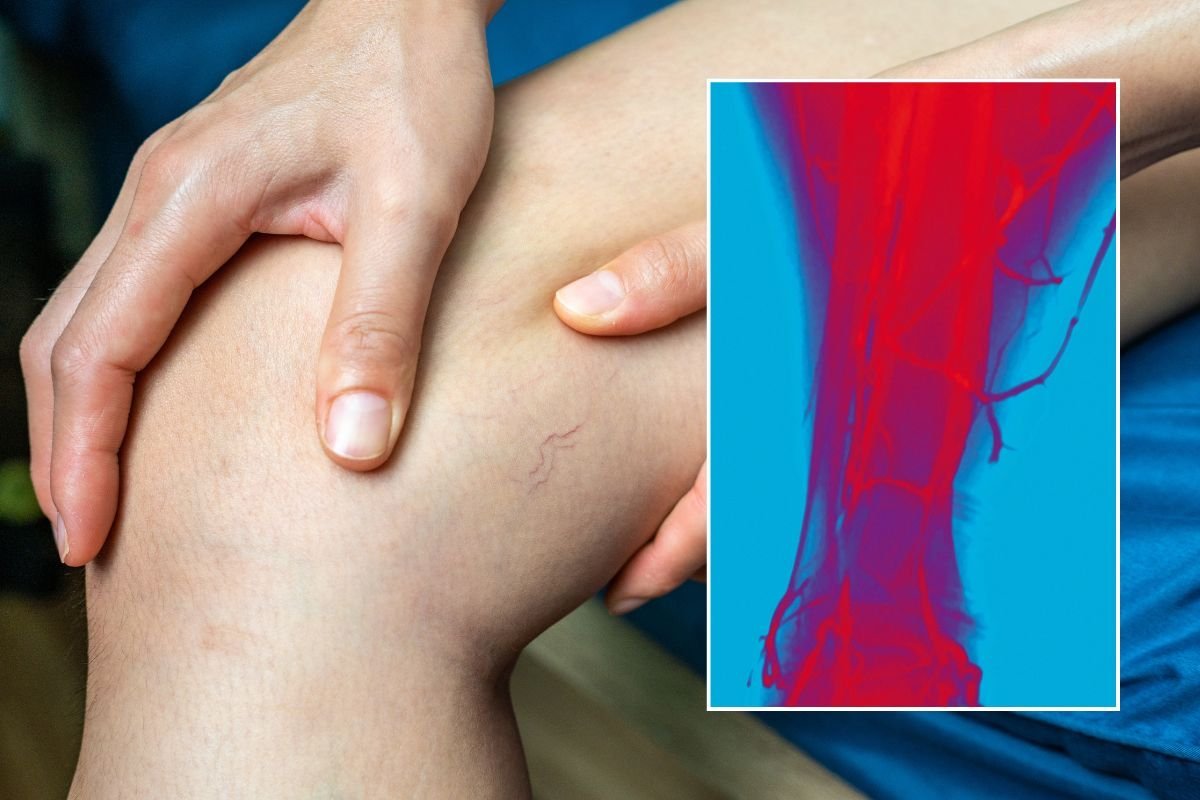
Deep vein thrombosis often masquerades as everyday ailments, leading many Britons to dismiss potentially life-threatening warning signs as minor inconveniences. Swelling in the calf represents one of the most frequently overlooked indicators of a blood clot.Dr Tonie Reincke, Medical Director at Reincke Vein Center, told GB News: “Patients often dismiss this as related to ‘overdoing it’ at work or after exercising.”The crucial distinction lies in how DVT swelling behaves compared with ordinary inflammation.More than 50 per cent of people with DVT don’t experience symptoms in the leg | GETTYPlease write at least 4 paragraphs”The difference between DVT swelling and most other types of swelling: it is in one leg, occurs acutely, worsens despite rest/ice/elevation/NSAIDs,” Dr Reincke explained.This failure to improve with standard remedies should prompt immediate medical attention rather than continued self-treatment at home.A persistent heavy ache in the calf muscle that mimics end-of-day fatigue from physical activity is another symptom frequently ignored.Dr James Chao, Co-Founder and Chief Medical Officer at VedaNu Wellness, said: “Your first thought is probably ‘I must have pulled something’. However, when you pull a muscle it gets better when you rest and stretch.”The behaviour of the discomfort reveals its true nature.”A clot will generally remain the same or get worse when you point your foot upwards,” Dr Chao explained.Temperature differences between legs offer another diagnostic clue, with the affected limb typically feeling warmer to the touch.”Cramping pain comes and goes. DVT pain lingers in one spot. Frequently the back of your knee or lower calf, regardless of how you move your leg,” he added.Perhaps most alarming is the frequency with which blood clots develop entirely undetected in the lower limbs.”Upwards of 50% of deep vein thromboses present with no symptoms in the leg,” Dr Chao revealed.This silent progression makes the condition particularly dangerous, as fragments can detach and migrate to the pulmonary system without prior warning.When the body successfully reroutes blood flow around the obstruction, neither pain nor swelling may manifest.”But then out of nowhere, shortness of breath occurs. Perhaps a stabbing chest discomfort on deep breaths, or your heart starts pounding over 100 beats per minute,” Dr Chao said.The absence of preceding leg symptoms often leads patients to dismiss these chest complaints, unaware they signal a potentially fatal pulmonary embolism.The combination of inadequate fluid intake and prolonged stillness creates ideal conditions for clot formation.”Dehydration alone slightly increases your risk, but add in immobility and you’ve got a recipe for trouble,” Dr Chao warned.Insufficient hydration thickens the blood, causing it to move sluggishly through the veins and become more prone to clotting.DVT can lead to pulmonary embolism | GETTY”Constrain your legs in a seated position for 6 hours without moving on an airplane and drink less than adequate fluids. Then you’ve got stagnant blood pooling in your calf veins,” he explained.Neither factor alone typically triggers clot formation, but their combination proves difficult for the body to overcome.Dr Chao recommends straightforward preventive measures: walking regularly, performing calf flexes hourly, and consuming approximately 8oz of water each hour during periods of extended sitting.Our Standards:
The GB News Editorial Charter