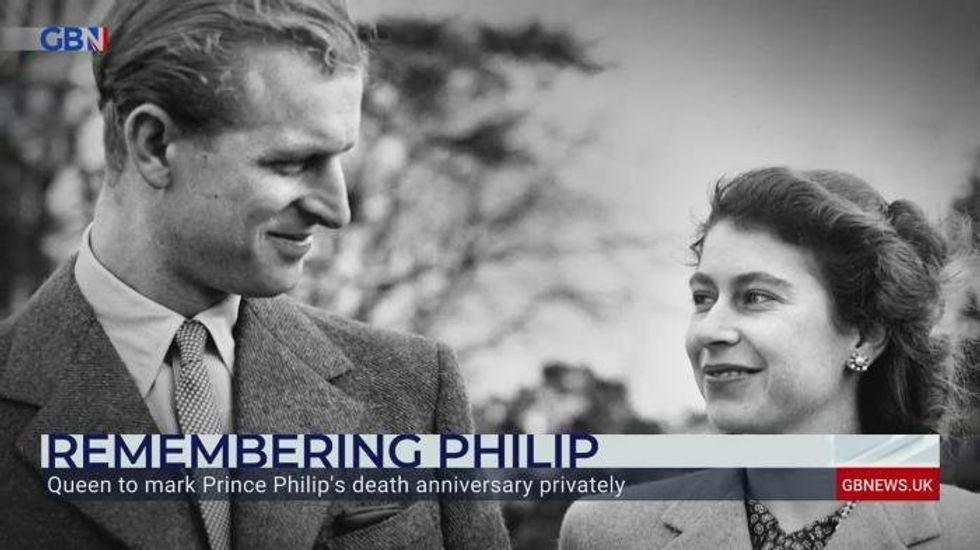
Prince Philip secretly battled inoperable pancreatic cancer for nearly eight years before his death in April 2021, royal historian Hugo Vickers has claimed.In his newly published biography Queen Elizabeth II, Mr Vickers wrote the Duke of Edinburgh received his diagnosis during an 11-day hospital admission in June 2013, when he was 91 years old.The revelation is particularly striking given that pancreatic cancer typically carries an extremely poor prognosis, with the vast majority of patients surviving far shorter periods following diagnosis.Mr Vickers provides a vivid account of the Duke’s final hours, describing how Philip managed to evade his nursing staff on his last evening alive.Prince Philip secretly battled inoperable pancreatic cancer for nearly eight years before his death in April 2021, royal historian Hugo Vickers has claimed. | GETTYThe historian wrote: “On the last night of his life, he gave his nurses the slip, shuffled along the corridor on his Zimmer frame, helped himself to a beer and drank it in the Oak Room.” The following day, Philip rose, took a bath, then indicated he was feeling unwell before passing away peacefully.”By this point, he had lived with pancreatic cancer for nearly eight years far longer than the usual survival time from diagnosis,” Mr Vickers noted.According to Mr Vickers’ account, the cancer was discovered after doctors identified a “shadow” on Philip’s pancreas during his 2013 hospital stay at a private clinic.Mr Vickers provides a vivid account of the Duke’s final hours, describing how Philip managed to evade his nursing staff on his last evening alive. | GETTYExploratory surgery subsequently confirmed the presence of inoperable pancreatic cancer.This diagnosis came two years after the Duke had been hospitalised in 2011 for a blocked coronary artery.Despite living with the disease for almost eight years, Philip’s official cause of death was recorded as “old age” when he died in April 2021.He had been discharged from hospital shortly before his death following treatment for a pre-existing heart condition.The book also reveals that Philip had no desire to reach his 100th birthday, reportedly disliking the attention such milestones attracted.The Queen was said to have been saddened that she was not present at the moment of her husband’s death. | GETTYThe Queen was said to have been saddened that she was not present at the moment of her husband’s death.Covid restrictions meant only 30 mourners could attend his funeral, with the monarch sitting alone as Philip was interred in the Royal Vault at St George’s Chapel.Pancreatic cancer claims approximately 10,200 lives annually in the UK, ranking as the fifth most common cause of cancer death.Fewer than five per cent of patients survive beyond ten years, with roughly half dying within three months of diagnosis.